
Pittsfield Township Resident Lookup Coverage
A good Pittsfield Township resident lookup depends on knowing what each record can actually confirm. County parcel files place a name in an owner, taxpayer, or mailing field. That placement does not prove the person lives there. A recorded deed names grantors, grantees, trustees, and mortgage parties. Court indexes list public case participants. Voter rolls, license files, vital records, and historical sources each answer their own narrow question. Treat every result as source-specific evidence rather than one merged profile. The lookup stays honest that way.
| Record | What It Confirms | Where | Access |
|---|---|---|---|
| Parcel and tax | Owner, taxpayer, or mailing-recipient association with a parcel | Washtenaw Parcel Lookup and Pittsfield Assessing | Public fields vary; check source date |
| Recorded documents | Grantor, grantee, mortgagee, trustee, or other recorded party | Washtenaw Register of Deeds | Index lead; copy or image may need an account or payment |
| Voter file | Public name, jurisdiction, precinct, or election-history context | Michigan QVF route and Pittsfield Clerk | Defined public fields only |
| Court index | Public participant, case number, status, and disposition lead | MiCOURT, Odyssey, and 14A-1 | Informational index with exclusions |
| Vital record | Accessible death, marriage, divorce, or eligible birth event | MDHHS and Washtenaw Vital Records | Eligibility and copy type control access |
| License or entity | Public licensee or documented entity affiliation | LARA MiPLUS and MiBusiness routes | Live fields and roles must be dated |
| Historical source | Earlier address, household, or family relationship | AADL, archives, probate, cemetery, and newspapers | Date and source type matter |
Start with the record that fits the question. Present parcel questions belong in the property systems. Older family questions may call for probate, cemetery, directory, or newspaper material instead. Even a clean name hit is just a lead until a second independent record backs up the identity.
Confirm a Pittsfield Township Resident Twice
Two records do not describe one person without a second anchor. A public address, a dated directory entry, or a case number can serve. An event date or a documented family relationship can also work. Keep the agency's relationship label intact, too. Taxpayer, voter, participant, and licensee are distinct roles. Decedent, heir, and recorded grantee are also distinct roles. None are interchangeable synonyms for resident.
- Search the name and spelling variants in the county parcel or BS&A route. Keep the property address separate from the taxpayer mailing address.
- Record the municipality, postal city, ZIP, parcel number, and retrieval date before comparing a second source.
- Use a public court, voter, license, deed, or historical record that supplies an independent date, role, address, or case number.
- Stop at an association when the second anchor is missing. An unanswered search is not proof that a person is absent.
- Docket
- A docket is the court's running list of events and filings in a case. It is not the complete official case file.
- Index versus image
- An index points to a record. An image or copy is the underlying document, which may have different access rules or a fee.
- Certified copy
- A certified copy is issued by the responsible custodian with official certification. A genealogy copy or index lead is not automatically certified.
Note: Keep the source role and date beside each name match so a later reader can separate a lead from a verified connection.
Pittsfield Township Court Lookup Routes
Misdemeanor, civil infraction, and traffic matters for Pittsfield Township run through 14A-1 District Court. For public case searching, start with the Washtenaw Odyssey public-access portal. It opens with clear categories. These include Criminal Case Records, Civil/Family/Probate Case Records, Court Calendar, and Search Help. Sometimes a named file or a copy is the goal. Then the county's court-record request route is the stronger path. Searches that reach beyond the county belong in MiCOURT.
MiCOURT accepts a participant name or case number. It then lets you narrow by name form, case category, subcategory, year, status, public status, jurist, and filing or disposition dates. Its online display is not the official court file. Protected categories sit outside the system. These include adoption, juvenile and child-protective matters, mental-health matters, name changes, and personal protection orders. So a negative result never proves an older or protected record is absent.
The Odyssey category screen lays out the main Washtenaw court-search paths. It does this before any name is entered.
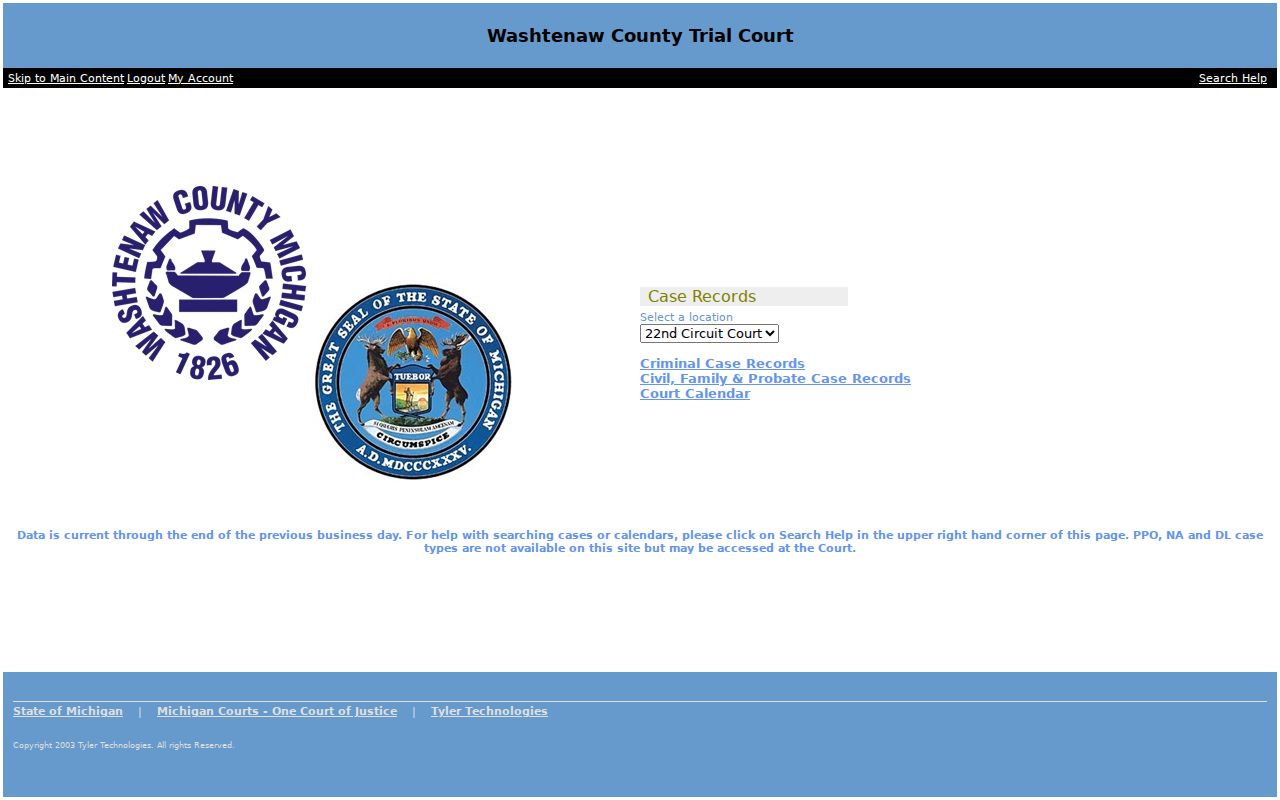
Pick a category first to narrow the public search, then save the court, case number, party role, type, status, and procedural date together with the result.
| Public docket field | What it can identify |
|---|---|
| Participant and party role | The public name and role attached to the case |
| Case number, year, and court | The key details needed to request the correct file |
| Case type, category, and status | The procedural category and current public status |
| Filing and disposition dates | When the case began and any public outcome date |
| Register of actions or events | Publicly listed steps in the case process |
Pittsfield Township Vital Record Access
For a vital event tied to Pittsfield, two routes matter. The Michigan MDHHS ordering route governs statewide eligibility, fees, and processing, while Washtenaw Vital Records handles local birth, death, marriage, and genealogy ordering. Michigan holds certified birth, death, marriage, and divorce records from 1867 forward. A court divorce file and a state divorce certificate remain two separate records.
MDHHS accepts orders online, by mail, by phone, by drop box, and by in-person appointment. Its published search fee is $34, with $14 added for online processing. Regular processing runs an estimated 10 to 12 weeks. Expedited service runs 8 to 10 weeks, and genealogy requests take longer. Check fees, eligibility, and timing again before ordering, because the search fee is not refunded even when no record turns up.
Access rules vary by record type. A birth record under 100 years is limited to the subject, a named parent, a guardian, a qualified heir, a court, or an authorized representative. Birth records past 100 years are open to public ordering under the state rule. Death, marriage, and divorce copies are generally available on written request with a fee under MCL 333.2882, though a confidential probate marriage record goes only to the bride or groom. Name the copy type you want, and confirm the event county, approximate date, alternate names, and any relationship documents required.
Pittsfield Township License and Voter Roles
A public credential can anchor an identity when it supplies a dated role. But it is not a home-address finding. The LARA license lists and reports route, along with MiPLUS verification, can show a licensee's name and profession. It also covers status, expiration date, address, issue date, specialty, and email where maintained. LARA charges $15 per license for a certified verification. Record the status and the date you retrieved it, since a live listing can change.
The LARA active-license display shows the kind of fields that should stay labeled as professional or official-contact information.
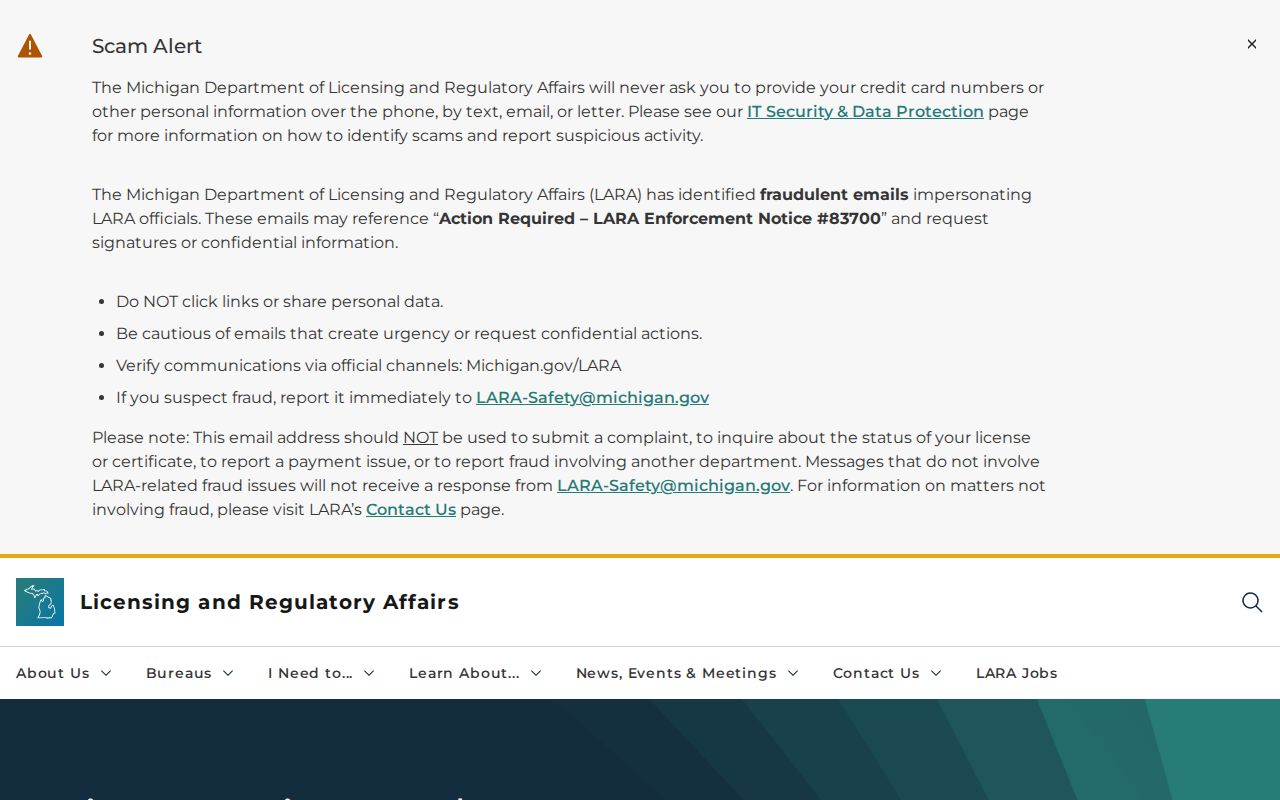
A license record shows an address exactly as the agency lists it. That listing is not proof of a Pittsfield Township residence. Treat it as a lead only. Michigan's Qualified Voter File takes a narrower approach to public access. The Secretary of State makes name, year of birth, address, jurisdiction, precinct, and defined history-file material public, while driver-license and state-ID numbers, month and day of birth, phone, email, declined-registration data, and receiving-office identity stay protected. A specific public-record purpose may justify a Pittsfield Clerk question or a defined QVF request. It never justifies reproducing a raw voter file.
Pittsfield Township Family Relationship Trails
Current parcel records answer family questions poorly. A family trail needs older paper. Washtenaw probate calendars run from 1842 to 1941, and the Archives of Michigan guide lists estate-file runs covering 1828 to 1889 and 1889 to 1940. Probate files, cemetery transcriptions, yearbooks, oral histories, directories, and newspapers often explain an older relationship to a place more clearly than a modern resident lookup does. Cemetery stones can name kin. So can an estate inventory. Any heir, property, or address connection should still rest on the document's own relationship language rather than inference. A former classmate search works better in yearbooks. The digitized AADL yearbooks span Ann Arbor schools from 1885 to 2000, so they supply school context rather than proof of a Pittsfield address. Older directory and archive work can continue through the Pittsfield Township directory book when a dated household trail is needed.
Pittsfield Township Registry Category Limits
The Michigan Public Sex Offender Registry is a special statutory registry, not a general resident lookup. Its search controls are narrow. A user can search by first or last name, registration or MDOC number, street address with city, county, or ZIP, and a neighborhood radius. Publication categories and exclusions are built into the results. Victim information is never released. The full list cannot be downloaded, and the official search page displays only its distinct name and location inputs.
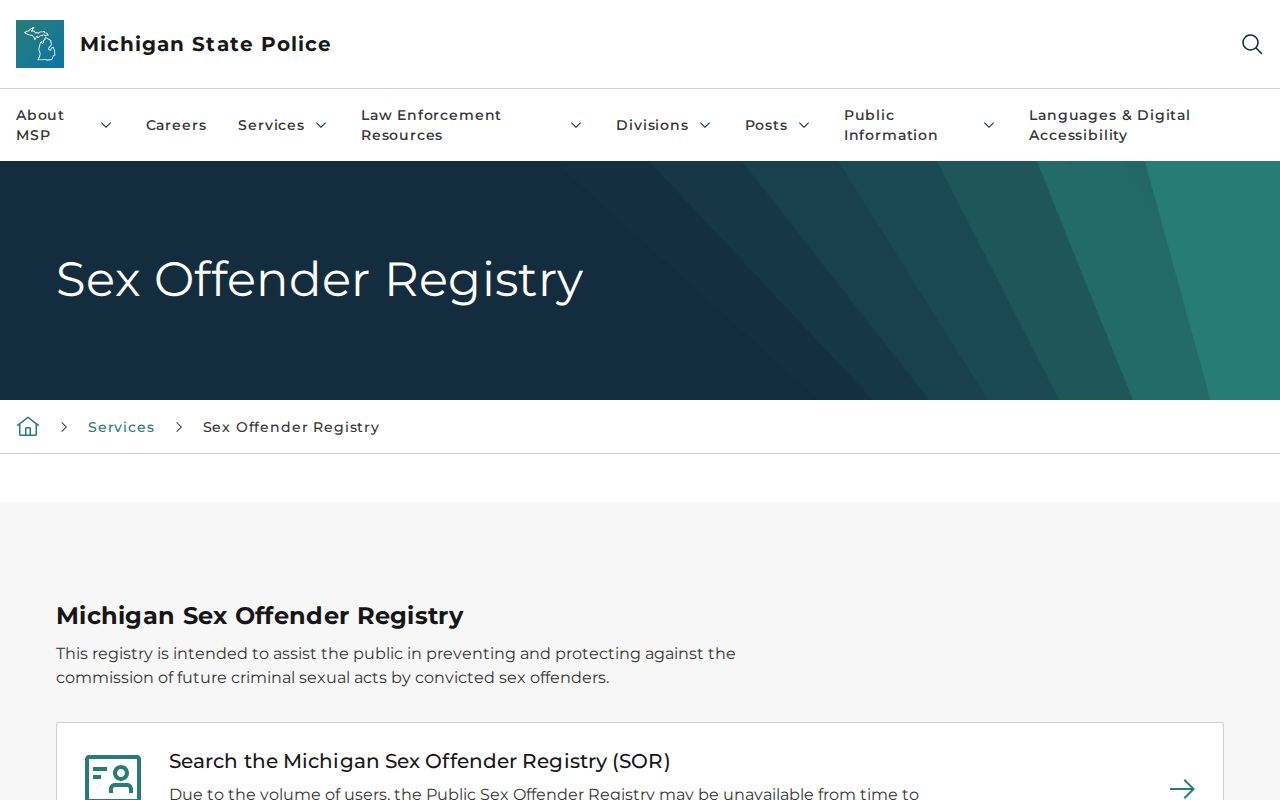
Never merge registry results with parcel, voter, license, school, or association records. Widening an identification that way distorts what each agency published, so preserve the agency, retrieval date, scope, and exact official record link with anything you keep.
Pittsfield Township Record Request Fallback
Sometimes no published record answers a narrow question. The Pittsfield FOIA route can request a dated, address- or parcel-specific township record. Michigan FOIA is MCL 15.231 et seq. Under MCL 15.235, a public body generally responds within five business days and may extend in writing for up to ten more. Ask for the smallest useful record set. State the department, date range, record type, exact address or parcel, and preferred inspection or electronic-copy format, and accept redaction. Court files follow a different path. Ask the county court for the identified case and document. Certificates follow an eligible MDHHS or county vital route. Voter material needs the defined QVF file and period. A denial or no-record response keeps its stated scope and exemption, never becoming a conclusion about a person.
Pittsfield Township Resident Lookup Privacy
Public availability in Michigan does not erase confidentiality. Address, court, voter, and vital sources each carry limits. The Michigan Address Confidentiality Program, created by 2020 PA 301 and MCL 780.851 et seq., gives eligible participants a designated address with mail-forwarding protection. Never try to reconcile that address with a private residence. Sealed proceedings, restricted vital data, and protected voter fields all stay outside a routine public lookup.
Lawful personal use. Use Pittsfield Township records for a defined, lawful personal or historical purpose. Do not use a name, address, or record trail to stalk, harass, intimidate, or harm anyone.